Soft Wash vs Pressure Wash in West Palm Beach
Which method your driveway, roof, stucco, screens, and wood actually need, and why the wrong one can cost more than the cleaning.
Free On Site Estimates · Serving West Palm Beach & Palm Beach County · Locally Owned
Pressure washing and soft washing both clean exterior surfaces with water, but they work in very different ways, and the wrong choice can strip paint, tear a screen, or damage a surface that was only dirty. This guide explains the difference, which surfaces suit each method, and how to tell which one a West Palm Beach property needs.
The Short Answer
Use pressure washing on hard, durable surfaces such as concrete, brick, and pavers. Use soft washing on anything softer, painted, porous, or easy to damage, including stucco, roofs, screens, and wood. Many properties need both, one for the driveway and another for the house.
- Pressure wash: concrete driveways, sidewalks, pavers, and brick
- Soft wash: stucco, painted walls, roofs, screens and pool cages, and outdoor wood
- Never pressure wash: an asphalt shingle roof
What Pressure Washing Does
Pressure washing pushes water through a nozzle at high force. That force lifts embedded dirt, oil, and algae from hard surfaces, which is why it works so well on concrete and brick.
The same force is the risk. The same source notes that pressure washing can strip paint and damage screens, shingles, and siding. Even on concrete, holding the wand too close or moving it unevenly can leave visible streaks, so technique matters as much as the machine.
What Soft Washing Does
Soft washing uses far less pressure through a wide nozzle that produces a gentle fan. Instead of blasting growth off the surface, it applies a cleaning solution, lets it sit so it can break down algae, mildew, and dirt, and then rinses it away. That protects paint, stucco, sealants, and coatings that high pressure can strip.
This is the approach behind our house and stucco soft washing, roof cleaning, and screen enclosure and fence cleaning.
Why a Roof Is Never Pressure Washed
Asphalt shingles are covered in granules that protect them from sun and weather, and force or friction can knock those granules loose. The Asphalt Roofing Manufacturers Association (ARMA) is direct about it: “DO NOT use a power washer or any type of brush or broom to clean algae from the roof surface.”
ARMA says dark algae streaks may be lightened with a solution of household bleach (sodium hypochlorite) and water, left on for about 15 to 20 minutes and rinsed with a gentle water spray. It notes the effect is temporary and the stains may return, that other cleaning chemicals or methods should not be used without the shingle manufacturer’s approval, and that cleaning can make a roof slippery, so it recommends professionals. You can read the full ARMA algae discoloration guidance on their site.
Surface by Surface: Which Method Fits
- Concrete driveways and sidewalks: pressure wash, covered in our driveway and sidewalk pressure washing service
- Pavers and patios: pressure wash with care around the joints, see paver and patio cleaning
- Stucco and painted walls: soft wash, see house and stucco soft washing
- Roofs: soft wash only, see roof cleaning
- Screens, pool cages, and fences: soft wash, see screen enclosure and fence cleaning
- Wood decks: low pressure and gentle cleaners, see wood deck cleaning
- Windows and gutters: see window and gutter cleaning
Two Surfaces, Two Methods
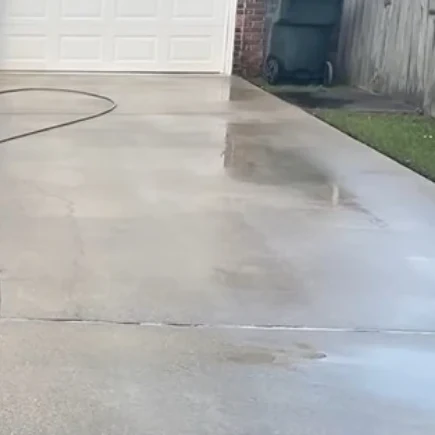
Hard concrete and delicate screens sit at opposite ends of the scale, and the photos below show both from our own jobs.
After: concrete driveway
After: screened pool cage
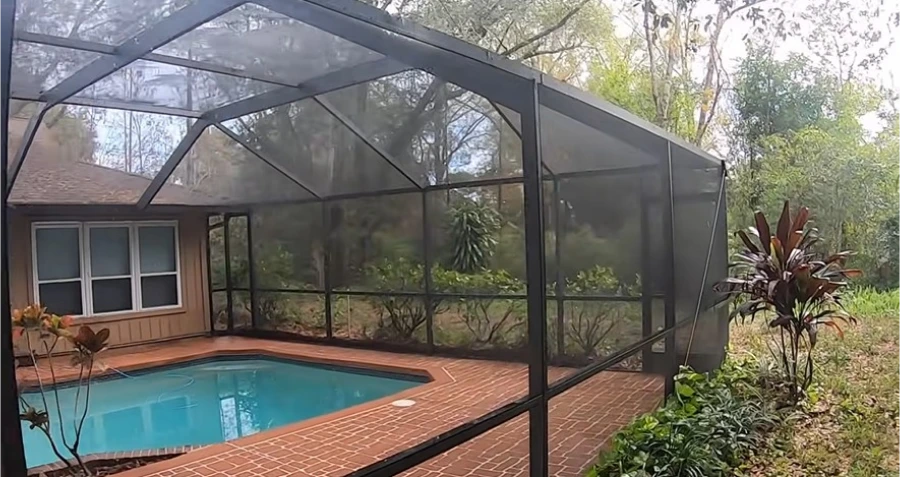
Two different surfaces from two of our jobs. Hard concrete suits higher pressure, while screens call for the gentler soft wash approach.
Why Florida Properties Lean Toward Soft Washing
South Florida’s humid climate keeps algae, mildew, and mold growing on shaded and north facing sides of a house almost year round. A lot of that growth sits on porous surfaces such as stucco and roof shingles, which is a main reason cleaning solutions are used there instead of force alone.
Stucco is also porous and can absorb water, so a high pressure stream aimed at cracks, seams, or window edges can push water where it does not belong. A low pressure rinse after a cleaning solution avoids that problem and is easier on the paint underneath.
Signs the Wrong Method Was Used
- Peeling paint or bare patches on stucco or siding after a wash
- Screens that look stretched, torn, or pushed out of their frame
- Roof granules collecting in gutters or at the end of downspouts
- Streaks, scars, or a striped pattern on concrete
- Raised, fuzzy, or splintered grain on wood
- Water stains inside walls or around windows after a cleaning
If you see any of these after a job, stop and have the surface looked at before cleaning it again, since repeating the same method usually makes it worse.
Can You Do It Yourself?
Renting a pressure washer is common, but the force that cleans a driveway can damage the surfaces around it. If you do it yourself, test a small hidden area first, keep the nozzle at a steady distance, keep water away from windows, doors, and outlets, and stay off the roof entirely. A professional estimate costs nothing and shows you which surfaces on your property need which method.
Frequently Asked Questions
What is the main difference between soft washing and pressure washing?
Pressure washing uses water at high force to blast dirt from hard surfaces. Soft washing uses much lower pressure, much lower, with a cleaning solution that sits on the surface and is then rinsed away.
Can you pressure wash a roof?
Not an asphalt shingle roof. The Asphalt Roofing Manufacturers Association says not to use a power washer or any type of brush or broom to clean algae from the roof, because force and friction can remove the protective granules.
Which method does stucco need?
Stucco is porous and painted, so it is best cleaned with a soft wash. A cleaning solution treats the growth, and a low pressure rinse avoids forcing water into cracks and seams.
Is soft washing safe around plants and landscaping?
Soft washing avoids high pressure, which makes it a common choice near plants and delicate surfaces. Plants close to the work area should still be protected and rinsed as part of the job.
Does soft washing clean as well as pressure washing?
They have different jobs. Pressure washing is better for embedded dirt on hard surfaces like concrete, while soft washing is better for treating algae and mildew on surfaces that high pressure could damage.
How do I know which method my property needs?
It depends on each surface, its condition, and how much growth is on it. A free on site estimate is the easiest way to get a clear answer, and many properties need both methods.
Not sure which method your property needs? A quick look at the actual surfaces is the best way to get the method and the price right. For every service in one place, see the complete pressure washing guide, and for real cost ranges see our 2026 pricing guide. We also serve Palm Beach Island, Palm Beach Gardens, North Palm Beach, and Boynton Beach.
Residential and commercial pressure washing and soft washing serving West Palm Beach and Palm Beach County, Florida.
Service Areas
West Palm Beach
El Cid
Flamingo Park
SoSo
Old Northwood
Palm Beach Gardens
North Palm Beach
Palm Beach Island
Lake Worth
Wellington
Royal Palm Beach
Boynton Beach
Delray Beach
Lantana
Juno Beach
Jupiter
Get In Touch
Free on site estimates for driveways, roofs, pavers, and full home exteriors across Palm Beach County.
West Building, 4188 Westroads Dr
West Palm Beach, FL 33407
Call (728) 233-5999
© 2026 Pressure Washing West Palm Beach. All rights reserved. | Privacy Policy